
- About us
- Contact us: +1.641.472.4480, hfi@humanfactors.com
Cool stuff and UX resources


One of these things is not like the others
If you're a human factors/usability practitioner like me, you were probably "raised" on the core attributes of usability:
- effectiveness
- efficiency
- ease of learning
- memorability
- error handling
- aesthetic satisfaction
And if you're like me, you may have treated that last one – aesthetics – as somewhat of an afterthought, covered quickly with a few preference-oriented, rating-scale questions, or dismissed with a comment like, "We'll get to the visual design later. First let’s focus on how it works."

Hold that response
There is a lot of talk about beauty in the HCI community (e.g., Norman 2004). However, research tying aesthetics to design is still rather new. (e.g., Kurosu and Kashimura, 1995; Lavie and Tractinsky, 1997; Tractinsky, Katz and Ikar, 2000; Wilson, 2002). These studies demonstrate the "what is beautiful is good" stereotype. That is, they show that the beauty of a product can influence the users' overall impression or general user satisfaction of the product. Think iPod. But how do you measure that?
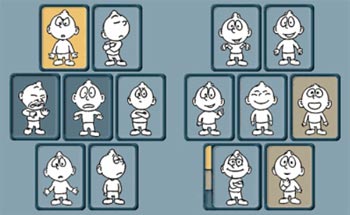
One of the challenges in measuring the product-emotion relationship is that users are not good at articulating their emotional responses, at least not in a way that's consistent across users. To deal with this challenge design researchers have developed standard measures to help users express their range of emotion by selecting pictures rather than picking words. One such example is Desmet's (in press) Product Emotion Measurement (PrEmo). When using PrEmo, participants' pick the cartoon-like expression that matches their experience. The cartoons dramatically simplify the user's task of representing an abstract emotional response.
There are other similar approaches – such as mood boards – sometimes used in the design space.
Being beautiful helps
Hassenzahl (2002) suggests that users develop an assessment of a product by bundling impressions about various attributes to make up a "product character." The attributes (and the weights of attributes) in the bundle include impressions about the product interaction, the content, the consumers' personal expectations or standards for quality, and, of course, impressions about the physical characteristics of the product. "Product characters" evaluations are very personal. For example, while one user may construe a Web site layout as new or novel, another user may perceive it as amateurish.
Hassenzahl's model separates attributes into two different types: Pragmatic Attributes and Hedonic Attributes. Usability professionals are familiar with the concept of pragmatic attributes. Pragmatic attributes are linked to getting things done. Hedonic attributes are related to how the object reflects the user's (perception of his/her) self. For instance, the Hedonic quality of Identification describes how important it is for users to express themselves through the objects around them and how much energy they focus on selecting objects to promote their "personal brand."
Try this question:
Would you prefer to ride:
(a) a Harley Davidson
(b) a Japanese Racing Motorcycle
(c) it doesn't really matter
If you answered either A or B – adamantly – Hedonic Identification qualities are important to you – at least with respect to motorcycles. (We are oversimplifying a little to make a point.)
Hassenzahl identifies a second hedonic quality – Stimulation – that describes the feeling of novelty and challenge within an experience. Stimulation (in slightly different terms) has previously been identified as important in evolutionary psychology, aesthetic philosophy, and theories of experiential flow. The oversimplified distinction here is: Would you prefer to do a puzzle you have done a hundred times and can solve easily, or one that challenges you to think in new and novel ways?
Hassenzahl captures users' perception of the relation of Pragmatic, Hedonic and Overall Impressions for products using a familiar, bi-polar anchor Likert rating scale approach, as shown below in both English translation and the original German anchors:
| Pragmatic Quality Anchors | |
|---|---|
| English Translation | Original German Anchors |
| Technical – Human Complicated – Simple Impractical – Practical Cumbersome – Direct Unpredictable – Predictable Confusing – Clear Unruly – Manageable |
Technisch – Menschlich Kompliziert – Eeinfact unpraktisch – Practisch Umstänskuxg – Direkt Unberechenbar – Voraussagbar Verwirend – Ubersichtlich Widerspenstig – Handhabbar |
| Hedonic Quality – Identification Anchors | |
| English Translation | Original German Anchors |
Isolating – Integrating |
Isolierend – Verbinden |
| Hedonic Quality – Stimulation Anchors | |
| English Translation | Original German Anchors |
| Typical – Original Standard – Creative Cautious – Courageous Conservative – Innovative Lame – Exciting Easy – Challenging Commonplace – New |
Konventionell – Originell Phantesielos – Kreativ Vorsichtig – Mutig Konservativ – Innovative Lahm – Fesselnd Harmlos – Herausfordernd Herkömmlich – Neuartig |
| Overall Appeal | |
| English Translation | Original German Anchors |
| Ugly – Beautiful Bad – Good |
Hässlich – Schön Schlecht – Gut |
In early studies using these rating scales, Hassenzahl found that both hedonic attributes and perceived pragmatic attributes correlate with users' ratings of overall appeal of a product.
When beauty IS only skin deep...
In subsequent studies, Hassenzahl (2004) explored how beauty continues to influence perceived "Goodness" (or not) when people have direct experience with an interface. Here Hassenzahl presented a variety of MP3 skins for evaluation. In one experiment, he asked participants to rate the "Beauty" and "Goodness" of skins without any experience of using them. In a second study, he asked participants with experience using the skins to rate "Beauty" and "Goodness."
These studies are important because they explore how the relationships between beauty, usability and overall perception change after consumers actually use the product. In Hassenzahl terms, they seek to tease apart "Beauty" and "Goodness."
Hassenzahl found that when participants only looked at the skins:
- Beauty was influenced only by Hedonic-Identification ratings
- Goodness was influenced by Hedonic Attributes and (anticipated) Pragmatic ratings
That is, when participants only looked at skins, ratings of goodness enfolded both Hedonic and Pragmatic perceptions.
In contrast, when participants used the skin:
- Beauty was influenced only by Hedonic-Identification ratings – remaining constant
- Goodness was more influenced by (actual) Pragmatic ratings reflecting experience with getting the tasks done
Hassenzahl concluded that ratings of beauty are hedonically driven. Perceived beauty is an independent pragmatic attribute, and largely doesn't change over time. To wit: Just because I still can't answer my Bang & Olfsen phone without thinking, doesn't mean it's less beautiful – even after 4 years. Completely unusable things can still be beautiful.
However, Hassenzahl's studies separate beauty from goodness. In contrast to beauty, goodness is influenced by hedonic qualities only initially. Over time the influence of the perceived hedonic attributes on goodness may fade in importance relative to the quality of the consumer experience – particularly if the interface is hard to use. That is, a beautiful interface that seemed like a good idea at the time becomes less appealing if it's not usable.
Beauty. What is it good for?
Hassenzahl's studies suggest that the emotional aspects of the design are important in attracting customers in the first place. Hedonic properties around beauty clearly influence first impressions. However, when getting stuff done matters, perceived usability – judged through usage over time – is what matters most.
References
Benedek, J., Miner, T. (2002). Measuring Usability: New Methods for Evaluating Desirability in a Usability Lab Setting. Presented at UPA conference, July 2002.
Csikszentmihalyi, M. (1991). Flow: The Psychology of Optimal Experience. Harper Perennial.
Desmet, P. (in press). Measuring Emotions. Development and application of an instrument to measure emotional responses to products. Published on personal Web site.
Hassenzahl, M. (2000). Hedonic and Ergonomic Quality Aspects Determine a Software’s Appeal. Presented at ACM CHI conference, April 2000.
Hassenzahl, M. (2004). The Interplay of Beauty, Goodness and Usability in Interactive Products. Human-Computer Interaction, Vol. 19, pp. 319-349.
Marcus, A. (2003). The Emotion Commotion. ACM Interactions, November-December, pp. 29-34.
Norman, D. A. (2004). Emotional Design: Why We Love (or Hate) Everyday Things. New York: Basic Books.
Tractinsky, N. (1997). Aesthetics and Apparent Usability: Empirically Assessing Cultural and Methodological Issues. Presented at ACM CHI, March 1997.
Message from the CEO, Dr. Eric Schaffer — The Pragmatic Ergonomist

It is nice to be able to measure facets of emotion and we have done that for ages. But we are weak in DESIGNING for emotion. It is good to make the connection that the brand/application requires "Exciting" and the design elicits "Excitement." In particular, we are happy to reject designs that are failing in this regard (we've done that a lot). But, what we really need are models that tell us how to design for "Excitement."
What does this MEAN for interface design? There are a few models that help (c.f., Flow: The Psychology of Optimal Experience by Mihaly Csikszentmihalyi). But our field is just beginning to create the predictive and prescriptive models we really need. We need fundamental models (like the concept of "flow") for how to design for emotion. Then we need to understand how these differ in mechanism between groups of different age, experience, role, and culture.
Leave a comment here
Reader comments
Jim Voorhies
Deloitte
Interesting article. "...a beautiful interface that seemed like a good idea at the time becomes less appealing if it's not usable... However, when getting stuff done matters, perceived usability – judged through usage over time – is what matters most."
The one thing that isn't mentioned is the other side of this coin, which goes to the heart of the differences in approach between usability work and design work. If a site that is imminently usable but unattractive to the user is compared with another site that is equally usable but more attractive, which gets used more?
Until usability practitioners and designers can join forces to create the best of both worlds, we continue to fail our users.
Sergio Barrientos
As a Chief Creative Officer of an interactive agency, we're trying hard to identify PrEmo models and try to see how impact on a mood once an action is taken. As interactive projects are more reactive than any other communications pieces, I wonder how can a system be built that responds to users moods...
David Heller
Synaptic Burn
One of the great things about Don Norman's book is that he speaks of emotional responses (not of beauty) as something that happens at 3 different levels. These levels exist along different time periods and thus means that while visceral emotional responses can be tested in most usability studies, behavioral and reflective emotional responses occur over a much broader time frame and thus a lab setting does not afford this level of testing, unless you repeat and compare testing results over time.
Now I would also argue that aesthetics exist at many levels within a User Experience and the presentation layer is but one piece. I recommend people check out my "Whiteboard" column in the May/June 2005 edition of ACM <interactions> on the complexity of aesthetics in interaction design.
Subscribe
Sign up to get our Newsletter delivered straight to your inbox
Privacy policy
Reviewed: 18 Mar 2014
This Privacy Policy governs the manner in which Human Factors International, Inc., an Iowa corporation (“HFI”) collects, uses, maintains and discloses information collected from users (each, a “User”) of its humanfactors.com website and any derivative or affiliated websites on which this Privacy Policy is posted (collectively, the “Website”). HFI reserves the right, at its discretion, to change, modify, add or remove portions of this Privacy Policy at any time by posting such changes to this page. You understand that you have the affirmative obligation to check this Privacy Policy periodically for changes, and you hereby agree to periodically review this Privacy Policy for such changes. The continued use of the Website following the posting of changes to this Privacy Policy constitutes an acceptance of those changes.
Cookies
HFI may use “cookies” or “web beacons” to track how Users use the Website. A cookie is a piece of software that a web server can store on Users’ PCs and use to identify Users should they visit the Website again. Users may adjust their web browser software if they do not wish to accept cookies. To withdraw your consent after accepting a cookie, delete the cookie from your computer.
Privacy
HFI believes that every User should know how it utilizes the information collected from Users. The Website is not directed at children under 13 years of age, and HFI does not knowingly collect personally identifiable information from children under 13 years of age online. Please note that the Website may contain links to other websites. These linked sites may not be operated or controlled by HFI. HFI is not responsible for the privacy practices of these or any other websites, and you access these websites entirely at your own risk. HFI recommends that you review the privacy practices of any other websites that you choose to visit.
HFI is based, and this website is hosted, in the United States of America. If User is from the European Union or other regions of the world with laws governing data collection and use that may differ from U.S. law and User is registering an account on the Website, visiting the Website, purchasing products or services from HFI or the Website, or otherwise using the Website, please note that any personally identifiable information that User provides to HFI will be transferred to the United States. Any such personally identifiable information provided will be processed and stored in the United States by HFI or a service provider acting on its behalf. By providing your personally identifiable information, User hereby specifically and expressly consents to such transfer and processing and the uses and disclosures set forth herein.
In the course of its business, HFI may perform expert reviews, usability testing, and other consulting work where personal privacy is a concern. HFI believes in the importance of protecting personal information, and may use measures to provide this protection, including, but not limited to, using consent forms for participants or “dummy” test data.
The Information HFI Collects
Users browsing the Website without registering an account or affirmatively providing personally identifiable information to HFI do so anonymously. Otherwise, HFI may collect personally identifiable information from Users in a variety of ways. Personally identifiable information may include, without limitation, (i)contact data (such as a User’s name, mailing and e-mail addresses, and phone number); (ii)demographic data (such as a User’s zip code, age and income); (iii) financial information collected to process purchases made from HFI via the Website or otherwise (such as credit card, debit card or other payment information); (iv) other information requested during the account registration process; and (v) other information requested by our service vendors in order to provide their services. If a User communicates with HFI by e-mail or otherwise, posts messages to any forums, completes online forms, surveys or entries or otherwise interacts with or uses the features on the Website, any information provided in such communications may be collected by HFI. HFI may also collect information about how Users use the Website, for example, by tracking the number of unique views received by the pages of the Website, or the domains and IP addresses from which Users originate. While not all of the information that HFI collects from Users is personally identifiable, it may be associated with personally identifiable information that Users provide HFI through the Website or otherwise. HFI may provide ways that the User can opt out of receiving certain information from HFI. If the User opts out of certain services, User information may still be collected for those services to which the User elects to subscribe. For those elected services, this Privacy Policy will apply.
How HFI Uses Information
HFI may use personally identifiable information collected through the Website for the specific purposes for which the information was collected, to process purchases and sales of products or services offered via the Website if any, to contact Users regarding products and services offered by HFI, its parent, subsidiary and other related companies in order to otherwise to enhance Users’ experience with HFI. HFI may also use information collected through the Website for research regarding the effectiveness of the Website and the business planning, marketing, advertising and sales efforts of HFI. HFI does not sell any User information under any circumstances.
Disclosure of Information
HFI may disclose personally identifiable information collected from Users to its parent, subsidiary and other related companies to use the information for the purposes outlined above, as necessary to provide the services offered by HFI and to provide the Website itself, and for the specific purposes for which the information was collected. HFI may disclose personally identifiable information at the request of law enforcement or governmental agencies or in response to subpoenas, court orders or other legal process, to establish, protect or exercise HFI’s legal or other rights or to defend against a legal claim or as otherwise required or allowed by law. HFI may disclose personally identifiable information in order to protect the rights, property or safety of a User or any other person. HFI may disclose personally identifiable information to investigate or prevent a violation by User of any contractual or other relationship with HFI or the perpetration of any illegal or harmful activity. HFI may also disclose aggregate, anonymous data based on information collected from Users to investors and potential partners. Finally, HFI may disclose or transfer personally identifiable information collected from Users in connection with or in contemplation of a sale of its assets or business or a merger, consolidation or other reorganization of its business.
Personal Information as Provided by User
If a User includes such User’s personally identifiable information as part of the User posting to the Website, such information may be made available to any parties using the Website. HFI does not edit or otherwise remove such information from User information before it is posted on the Website. If a User does not wish to have such User’s personally identifiable information made available in this manner, such User must remove any such information before posting. HFI is not liable for any damages caused or incurred due to personally identifiable information made available in the foregoing manners. For example, a User posts on an HFI-administered forum would be considered Personal Information as provided by User and subject to the terms of this section.
Security of Information
Information about Users that is maintained on HFI’s systems or those of its service providers is protected using industry standard security measures. However, no security measures are perfect or impenetrable, and HFI cannot guarantee that the information submitted to, maintained on or transmitted from its systems will be completely secure. HFI is not responsible for the circumvention of any privacy settings or security measures relating to the Website by any Users or third parties.
Correcting, Updating, Accessing or Removing Personal Information
If a User’s personally identifiable information changes, or if a User no longer desires to receive non-account specific information from HFI, HFI will endeavor to provide a way to correct, update and/or remove that User’s previously-provided personal data. This can be done by emailing a request to HFI at hfi@humanfactors.com. Additionally, you may request access to the personally identifiable information as collected by HFI by sending a request to HFI as set forth above. Please note that in certain circumstances, HFI may not be able to completely remove a User’s information from its systems. For example, HFI may retain a User’s personal information for legitimate business purposes, if it may be necessary to prevent fraud or future abuse, for account recovery purposes, if required by law or as retained in HFI’s data backup systems or cached or archived pages. All retained personally identifiable information will continue to be subject to the terms of the Privacy Policy to which the User has previously agreed.
Contacting HFI
If you have any questions or comments about this Privacy Policy, you may contact HFI via any of the following methods:
Human Factors International, Inc.
PO Box 2020
1680 highway 1, STE 3600
Fairfield IA 52556
hfi@humanfactors.com
(800) 242-4480
Terms and Conditions for Public Training Courses
Reviewed: 18 Mar 2014
Cancellation of Course by HFI
HFI reserves the right to cancel any course up to 14 (fourteen) days prior to the first day of the course. Registrants will be promptly notified and will receive a full refund or be transferred to the equivalent class of their choice within a 12-month period. HFI is not responsible for travel expenses or any costs that may be incurred as a result of cancellations.
Cancellation of Course by Participants (All regions except India)
$100 processing fee if cancelling within two weeks of course start date.
Cancellation / Transfer by Participants (India)
4 Pack + Exam registration: Rs. 10,000 per participant processing fee (to be paid by the participant) if cancelling or transferring the course (4 Pack-CUA/CXA) registration before three weeks from the course start date. No refund or carry forward of the course fees if cancelling or transferring the course registration within three weeks before the course start date.
Cancellation / Transfer by Participants (Online Courses)
$100 processing fee if cancelling within two weeks of course start date. No cancellations or refunds less than two weeks prior to the first course start date.
Individual Modules: Rs. 3,000 per participant ‘per module’ processing fee (to be paid by the participant) if cancelling or transferring the course (any Individual HFI course) registration before three weeks from the course start date. No refund or carry forward of the course fees if cancelling or transferring the course registration within three weeks before the course start date.
Exam: Rs. 3,000 per participant processing fee (to be paid by the participant) if cancelling or transferring the pre agreed CUA/CXA exam date before three weeks from the examination date. No refund or carry forward of the exam fees if requesting/cancelling or transferring the CUA/CXA exam within three weeks before the examination date.
No Recording Permitted
There will be no audio or video recording allowed in class. Students who have any disability that might affect their performance in this class are encouraged to speak with the instructor at the beginning of the class.
Course Materials Copyright
The course and training materials and all other handouts provided by HFI during the course are published, copyrighted works proprietary and owned exclusively by HFI. The course participant does not acquire title nor ownership rights in any of these materials. Further the course participant agrees not to reproduce, modify, and/or convert to electronic format (i.e., softcopy) any of the materials received from or provided by HFI. The materials provided in the class are for the sole use of the class participant. HFI does not provide the materials in electronic format to the participants in public or onsite courses.